AKIBA LOST tgs: Story, Cast, and Gameplay Explained
Explore AKIBA LOST TGS 2025 coverage, including its live-action mystery, seven-character cast, branching choices, and 360-degree camera system.
AKIBA LOST TGS 2025: Why This Mystery Stands Out
A game developer turns his sister’s disappearance into a comeback project—and someone threatens him to stop. If you’re searching for AKIBA LOST tgs, the central attraction is a live-action thriller where your decisions connect seven characters’ lives rather than simply select the next scene. The AKIBA LOST tgs interview from Cubed3 explains why that distinction matters: progress in one character’s story can depend on what you do in another’s.
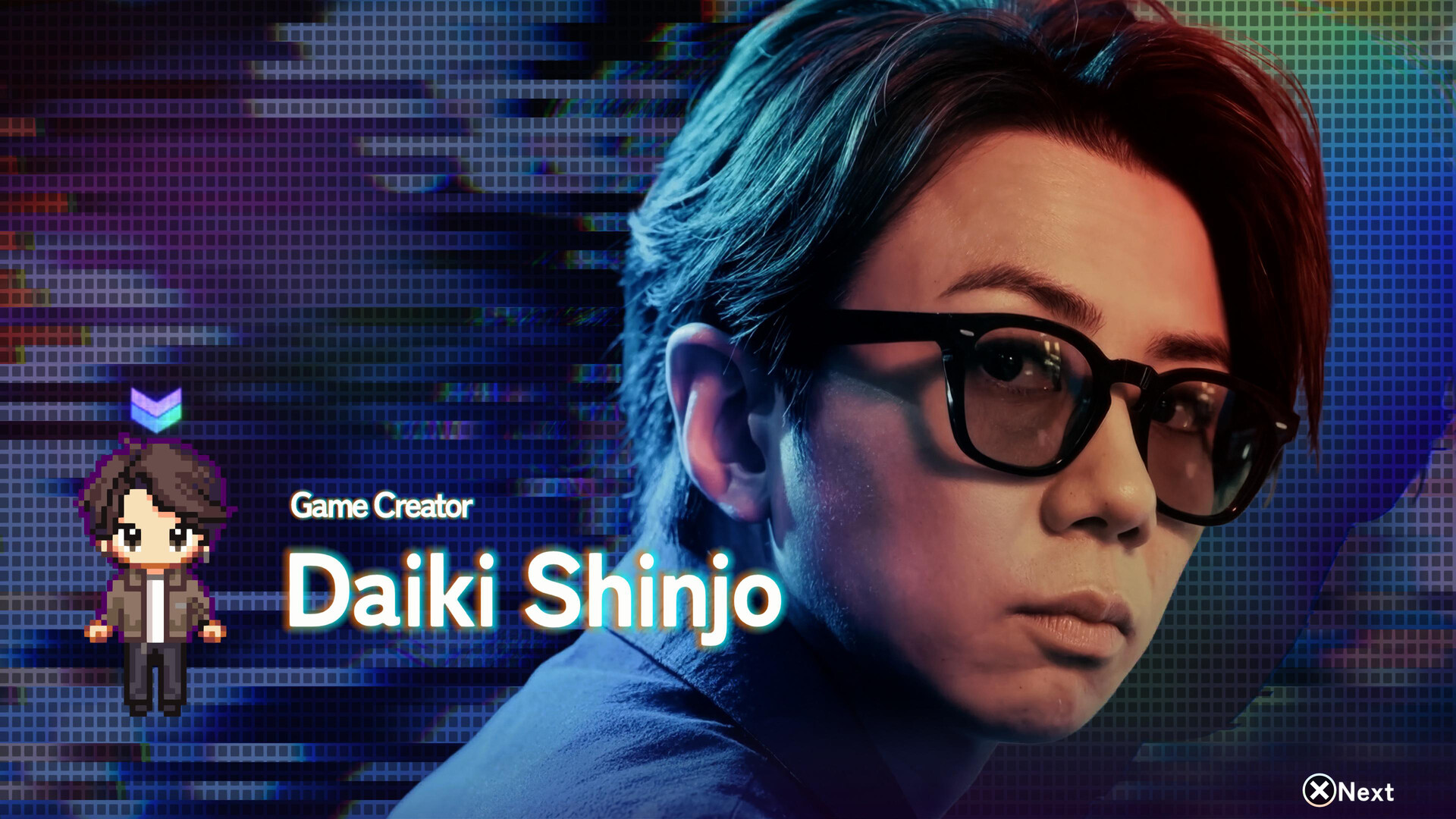
Official screenshot · Source: Steam store
Developed by IzanagiGames in collaboration with Nippon TV and its production team, AKIBA LOST combines filmed performances with the structure of a multi-perspective visual novel. Director and producer Shinsuke Umeda describes an ambition to modernize full-motion video, or FMV, storytelling rather than merely revisit its past.
This guide draws on that TGS 2025 interview and the official Steam description. It explains the premise, cast, and confirmed systems without revealing the mystery’s resolution or presenting promotional claims as hands-on findings.
| At a glance | Confirmed information |
|---|---|
| Genre | Live-action suspense adventure |
| Setting | Akihabara, Tokyo |
| Developer and publisher | IzanagiGames |
| Production collaboration | Nippon TV and its production team |
| Director and producer | Shinsuke Umeda |
| Central ensemble | Seven interconnected characters |
| Award recognition | 2025 Japan Game Awards, Future Division winner |
The Steam listing identifies the award recognition. It is useful context, but it should not be mistaken for a review score or evidence that every narrative branch works equally well.
The Story: A Game About Making a Dangerous Game
At the center of AKIBA LOST is Daiki Shinjo, founder of Shirosawa Games. His debut earned him a reputation as an exceptional creator, but subsequent projects failed to repeat that success.
His planned comeback is deeply personal. Thirteen years earlier, six girls disappeared in the fictional case known as the “Akiba Vanishing.” One was his youngest sister, Ruri. Shinjo now intends to build a game around the unresolved incident.
That project shares its name with the game you are playing: AKIBA LOST.
After Shinjo announces it at an in-story event called the Tokyo Game Expo, new disappearances begin. A threatening call demands that he abandon development, and his other younger sister, Aoi, vanishes.
Why the premise has more than one layer
The setup creates overlapping questions:
- Can Shinjo uncover what happened to Ruri?
- Can he protect the people involved in his new project?
- Can he finish the game despite the threats?
- How are the original disappearances connected to the present?
The game-within-a-game structure makes the creative process part of the danger. Shinjo is not simply investigating an old case; he is turning it into entertainment while people connected to that production face consequences.
For readers following AKIBA LOST tgs coverage, one distinction is worth keeping clear: the fictional Tokyo Game Expo belongs to the story. Cubed3’s TGS 2025 interview is real-world reporting about the production.
Also, the supplied material does not establish that the disappearances are based on an actual criminal case. Treat the Akiba Vanishing as part of the game’s fictional premise, not as true-crime history.
How Character Switching and Branching Choices Work
The most important gameplay detail in the AKIBA LOST tgs interview is the relationship between its protagonists. Their routes are not described as isolated stories that happen to share a setting.
Instead, the characters occupy a connected timeline. An action taken from one perspective can change what becomes possible from another.
| System | What the sources describe | What to keep in mind while playing |
|---|---|---|
| Character switching | Experience the same timeline through different protagonists | Another perspective may explain an obstacle |
| Branching decisions | Choices affect story routes and endings | Think about consequences beyond the current scene |
| FREEZE & ACTIVATE | Progress elsewhere can unlock a stalled storyline | A blocked route may require switching characters |
| 360-degree view | Look around from a character’s viewpoint | Take time to examine the available view |
| Buddy characters | Partner characters accompany the story | Pay attention to their dialogue and relationships |
FREEZE & ACTIVATE makes roadblocks meaningful
The official description calls its cross-character progression mechanic FREEZE & ACTIVATE. When a story reaches a stopping point, another character may hold the means to move it forward.
Umeda’s interview explanation reinforces that design: some problems can be addressed by the character experiencing them, while others require intervention elsewhere.
The practical implication is straightforward. If progress stops, do not automatically assume you chose incorrectly. Consider whether the game is asking you to understand another person’s circumstances first.
This shifts the challenge from “Which answer is correct?” toward “Whose actions could change this situation?”
What the 360-degree camera does—and does not establish
The Steam description says players can look around through characters’ eyes. That gives the cinematic presentation an interactive viewing component beyond conventional fixed shots.
However, the references do not specify how often this system appears, whether it includes mandatory clue searches, or whether every scene supports it. Nor does “360-degree” establish VR support.
For an accurate overview, describe it as an immersive viewpoint system—not unrestricted exploration.
Is there a choice-percentage display?
During the TGS interview, Umeda said the team did not plan to include a feature showing how other players voted on decisions in that version.
That is a dated development statement, not independent verification of every later build. If community-choice statistics matter to you, check the current feature information before buying.
Meet the Seven Leads—and the People Playing Them
The cast is another major draw of AKIBA LOST tgs coverage. Each lead connects the mystery to a different part of Akihabara, from game development and streaming to food writing, cosplay, and live performance.
| Character | Performer | Role in the story |
|---|---|---|
| Daiki Shinjo | Hiromitsu Kitayama | Game creator attempting a comeback |
| Aoi Shinjo | Sayuri Matsumura | Daiki’s younger sister and maid café manager |
| Yukimi Kurahashi | Momoko Tanabe | Game streamer and Shirosawa Games designer |
| Moe Kurosu | Misato Ugaki | Food writer specializing in Akihabara |
| Kokone Nagato | Yui Oguri of AKB48 | Underground idol in Baby☆Macaron |
| Chihiro Jimbo | Azusa Ohara | Part-time shrine maiden at Kanda Shrine |
| Wakana Yusa | MINA of East Of Eden | Akihabara-based cosplayer |
These roles provide more than visual variety. Aoi’s strained relationship with her brother gives the mystery a family dimension. Yukimi admires Shinjo’s earlier work, linking her personal investment to his professional reputation. Moe offers a perspective rooted in the neighborhood’s restaurants rather than its games alone.
Kokone’s public idol persona differs from her offstage life. Chihiro combines shrine work with an enthusiasm for demanding games. Wakana’s long commitment to a fictional character connects cosplay to identity and fandom.
Why television production experience matters
According to the interview, Nippon TV’s drama production side took the lead in finding the cast. IzanagiGames established the setting and character framework, while its partners contributed casting expertise.
The performers also described filming different versions of scenes to accommodate branching outcomes. Unlike a conventional drama, where one sequence becomes the final story, this format requires believable performances across several possible developments.
That is an important production challenge: a character must remain recognizable even when player decisions push events in different directions.
What the TGS Interview Reveals—and How to Approach the Game
Umeda cited 428: Shibuya Scramble, Machi, and Kamaitachi no Yoru among his influences. He also discussed how past collaboration with Danganronpa creator Kazutaka Kodaka informed his thinking about branching stories.
These references help explain the intended appeal of AKIBA LOST tgs coverage: intertwined perspectives, suspense, and meaningful decisions. They do not establish that AKIBA LOST reproduces those games’ mechanics or matches their critical reception.
Understand the footage figure before comparing value
Cubed3’s introduction describes more than 20 hours of filmed footage. That is a production-scale figure, not a dependable estimate for a single playthrough.
Branching scenes may include mutually exclusive outcomes. Reading speed, route exploration, and revisiting decisions can also affect the time a player spends.
| Detail | Supported conclusion | What it does not prove |
|---|---|---|
| More than 20 hours of footage | The production includes substantial filmed material | Every route lasts more than 20 hours |
| Choices can alter endings | Decisions affect narrative outcomes | A specific number of endings |
| Several playable perspectives | Character stories influence one another | Open-world freedom |
| Recognizable narrative influences | Umeda draws from established adventure traditions | Identical systems or difficulty |
| Future Division award | The title received official award recognition | A guaranteed personal recommendation |
Practical tips for a first playthrough
The following are preparation suggestions based on the documented design, not hands-on player experience or community reports.
- Track relationships, not just names. Knowing who trusts Shinjo, who resents him, and who works with him can help you interpret choices.
- Treat stalled routes as prompts to investigate elsewhere. FREEZE & ACTIVATE explicitly depends on connections between characters.
- Watch for timing. Because the protagonists share a timeline, when something happens may matter as much as who witnesses it.
- Avoid early ending searches. A spoiler-light introduction should be enough to determine whether the premise appeals to you.
- Verify purchase details separately. Confirm current pricing, supported languages, system requirements, and platform information before committing.
For current product information, consult the official AKIBA LOST Steam page. Store discounts can change, so an older sale headline should not determine your budget.
The clearest takeaway from the AKIBA LOST tgs interview is its focus on connected consequences. The pitch is not simply “watch a thriller and occasionally choose an answer.” It is to navigate a filmed ensemble mystery in which one person’s actions can release another person from a narrative dead end.
That makes it especially relevant to players who enjoy comparing perspectives, reconstructing events, and seeing how personal relationships shape a suspense story.
FAQ: AKIBA LOST TGS Coverage Explained
What is AKIBA LOST?
AKIBA LOST is a live-action suspense game from IzanagiGames, produced in collaboration with Nippon TV and its production team. It follows game creator Daiki Shinjo and six women connected to Akihabara as a fictional disappearance case becomes entangled with his new project.
What did the AKIBA LOST tgs interview confirm?
Cubed3’s TGS 2025 interview discussed interconnected character routes, branching decisions, the television-production collaboration, casting, and Umeda’s narrative influences. The official Steam description provides additional details about FREEZE & ACTIVATE and the 360-degree viewing system.
Is AKIBA LOST just an interactive movie?
Its presentation uses filmed actors, but its documented structure includes character switching and cross-character progression. Choices can affect other protagonists, unlock stalled paths, and change endings, making the connections between routes central to the gameplay.
How long does AKIBA LOST take to finish?
The supplied references do not establish a reliable completion time. Cubed3 describes more than 20 hours of filmed footage, but footage volume is not the same as one playthrough’s length. Avoid treating that figure as a guaranteed runtime.
Related Guides
AKIBA LOST gameplay: Choices and Systems Explained
Explore AKIBA LOST gameplay, including character switching, branching choices, 360° views, and practical tips for its live-action mystery.
AKIBA LOST official launch trailer: What to Know
Watch the AKIBA LOST official launch trailer and explore its live-action mystery, Switch release details, demo, and edition pricing.
AKIBA LOST official main trailer: Story & Platforms
Watch the AKIBA LOST official main trailer and explore its live-action mystery, seven viewpoints, Switch platforms, demo, and edition prices.
AKIBA LOST demo gameplay: A Beginner's Guide
Explore AKIBA LOST demo gameplay, character switching, branching choices, 360° views, save transfer, and spoiler-light tips for your first run.
AKIBA LOST metacritic: Score and Review Breakdown
AKIBA LOST has an 81 Metascore from four reviews. Explore its strengths, pacing issues, user score status, and who should play it.