AKIBA LOST 428 Comparison: Key Gameplay Differences
Compare AKIBA LOST with 428: Shibuya Scramble, from character switching and branching stories to live-action presentation and the Steam demo.
AKIBA LOST vs. 428: Why the Comparison Matters
One character’s seemingly harmless decision can become another character’s disaster—that’s the appeal behind the AKIBA LOST 428 comparison. For fans of interconnected mysteries, the connection matters because AKIBA LOST combines perspective switching and branching consequences with a more cinematic presentation. If your AKIBA LOST 428 search is really asking whether this scratches the same storytelling itch as 428: Shibuya Scramble, the answer is promising, but not a guarantee of equal quality.
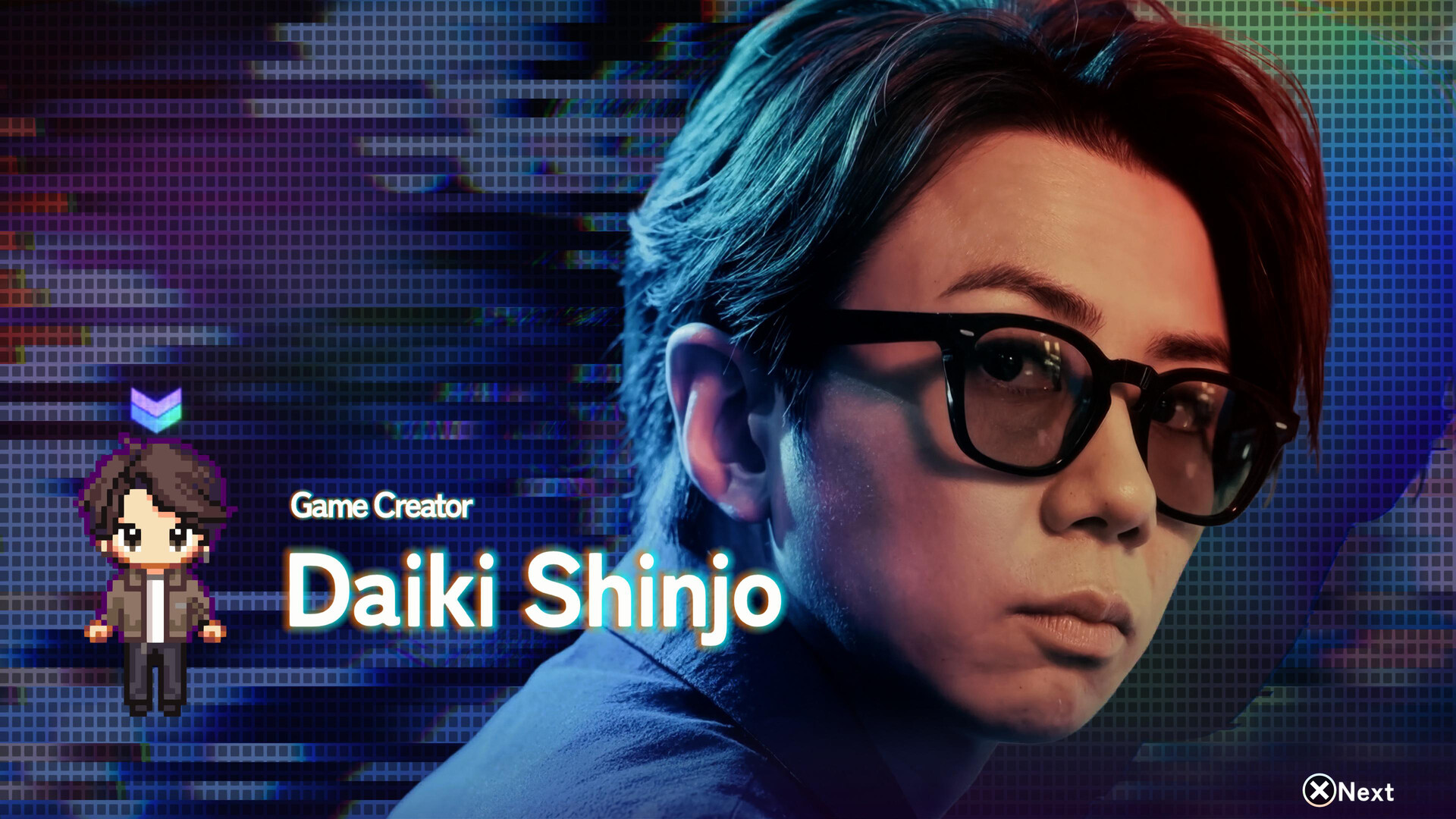
Official screenshot · Source: Steam store
The strongest similarities are structural: multiple protagonists, overlapping events, and choices that affect someone else’s route. The biggest differences are AKIBA LOST’s Akihabara setting, seven-day narrative, and emphasis on filmed performances and a 360-degree camera.
This comparison draws on the official Steam demo description and Cubed3’s Tokyo Game Show 2025 preview. It evaluates documented features rather than claiming a complete playthrough or declaring either game the winner.
| Comparison point | AKIBA LOST | 428: Shibuya Scramble |
|---|---|---|
| Setting | Akihabara, with characters tied to local subcultures | Shibuya, with intersecting urban storylines |
| Narrative structure | Seven central characters across a seven-day story | Interconnected protagonists whose stories influence one another |
| Core interaction | Character switching, branching choices, and route unlocking | Perspective switching and choices with cross-character consequences |
| Presentation | Live-action cinematics combined with still images | Predominantly photographic visual-novel storytelling |
| Distinctive appeal | A game-within-a-game mystery and immersive camera system | An intricate ensemble narrative built around cause and effect |
The useful question isn’t simply whether the games look alike. It’s whether switching perspectives makes the mystery more engaging—and whether you enjoy revisiting decisions to understand their wider consequences.
How Character Switching Connects the Two Games
The heart of the AKIBA LOST 428 comparison is narrative interdependence. You aren’t merely selecting a different narrator to watch an unrelated subplot. Events in one character’s story can change what happens elsewhere.
AKIBA LOST’s official description explicitly supports this design. Players can switch between characters sharing the same timeline, and a decision made in one route may affect another character’s fate or alter the ending.
That makes perspective switching both a storytelling device and a problem-solving tool. A scene that initially seems confusing may make more sense once you understand what another person was doing at the same time.
What FREEZE & ACTIVATE means
AKIBA LOST calls its route-unlocking mechanic FREEZE & ACTIVATE. When one character’s story cannot progress, another character’s route may contain the action needed to unlock it.
This is the clearest documented reason for 428 fans to pay attention. Progress depends on understanding relationships between routes, not simply choosing the most appealing dialogue option.
| Mechanic | Confirmed function in AKIBA LOST | Practical approach |
|---|---|---|
| Character switching | Shows a shared timeline through different viewpoints | Switch when a scene raises questions another character might answer |
| Branching decisions | Changes story direction and potentially the ending | Track consequential choices rather than treating them as isolated moments |
| FREEZE & ACTIVATE | Allows another route to unlock a frozen storyline | Investigate other characters instead of repeatedly retrying the blocked route |
| 360-degree view | Lets players look around from a character’s perspective | Explore the viewpoint without assuming every visible detail is a puzzle clue |
For example, imagine one character cannot reach a meeting because of something another person did earlier. A multi-route adventure might ask you to revisit that earlier decision rather than solve the problem at the blocked scene. That’s an illustrative example of the design principle, not a confirmed AKIBA LOST puzzle.
One important distinction remains: similar mechanics do not establish similar execution. The available sources don’t prove how difficult AKIBA LOST’s route dependencies become, how clearly it communicates solutions, or how satisfying its final branching structure is.
Live-Action Presentation: Where AKIBA LOST Stands Apart
If character switching explains the connection, presentation explains the difference.
428: Shibuya Scramble is associated with photographic storytelling: real actors and locations presented largely through still images and text. AKIBA LOST also uses photography, but its documented pitch places greater emphasis on filmed performances and cinematic immersion.
According to Cubed3’s Tokyo Game Show 2025 preview of AKIBA LOST, the production combines more than 100,000 still images with over 20 hours of filmed footage. Those are reported production figures, not a verified estimate of how long an individual playthrough takes.
That distinction matters. Footage volume doesn’t tell you how much appears on one route, how often scenes branch, or how long you’ll spend reading and reconsidering choices.
| Presentation element | What the sources establish | What remains unproven |
|---|---|---|
| Still photography | Cubed3 reports more than 100,000 images | How that volume translates into scene variety |
| Filmed sequences | Cubed3 reports over 20 hours of footage | The amount encountered in a single playthrough |
| 360-degree camera | The official description confirms freely looking around from character viewpoints | Whether it regularly supports puzzle solving |
| Dramatic pacing | The TGS preview describes measured, dialogue-driven tension | Whether that pace holds across the complete story |
For anyone approaching the AKIBA LOST 428 comparison through visual style, “more cinematic” shouldn’t automatically mean “better.” Still-image storytelling can give readers room to absorb expressions and control the pace. Filmed performances can convey timing, movement, and delivery more directly.
Your preference may depend on how you enjoy visual novels. If you favor reading at your own speed, test how AKIBA LOST balances text and footage. If you enjoy Japanese suspense dramas, its performance-led approach may be especially appealing.
The 360-degree view is another reason to try it firsthand. The official description confirms viewpoint control, but it doesn’t establish a free-roaming exploration game or a comprehensive evidence-search system.
Story and Setting: Akihabara Is More Than a Backdrop
AKIBA LOST follows Daiki Shinjo, a game developer whose celebrated debut was followed by less successful projects. He announces a new game based on an unresolved tragedy: six girls disappeared in Akihabara 13 years earlier, including his youngest sister, Ruri.
Then a threat arrives, his other sister Aoi disappears, and the past begins intruding on the production.
The premise gives the mystery a personal foundation. Daiki isn’t simply researching an interesting crime; he is turning a family trauma into a commercial creative project. That creates immediate questions about motivation, responsibility, and what revisiting the incident might unleash.
The ensemble also gives Akihabara several points of entry:
| Character | Role | Connection to the setting or central story |
|---|---|---|
| Daiki Shinjo | Game creator | Develops a game about the disappearances that affected his family |
| Aoi Shinjo | Maid café manager | Daiki’s sister, who has continued living in Akihabara |
| Yukimi Kurahashi | Designer and game streamer | Connects game development with online gaming culture |
| Moe Kurosu | Food writer | Covers the neighborhood through its restaurants and cafés |
| Kokone Nagato | Underground idol | Represents the local small-venue performance scene |
| Chihiro Jimbo | Part-time shrine maiden | Works at Kanda Shrine and is also an avid gamer |
| Wakana Yusa | Cosplayer | Has spent years devoted to a particular game character |
These roles offer more than visual variety. They create opportunities for characters to know different places, encounter different people, and interpret events differently.
For the AKIBA LOST 428 comparison, the meaningful shift is from one urban ensemble to another with a distinct cultural focus. AKIBA LOST emphasizes gaming, fandom, performance, and the tension between public personas and private lives.
Its story spans seven days, while the demo covers only the morning of Day 1. That gives the opening a clear limitation: it can introduce the cast and mechanics, but cannot establish whether the full mystery delivers satisfying answers.
Which Should You Play? Use the Demo to Decide
For 428 fans, AKIBA LOST’s most persuasive feature isn’t its production scale. It’s the possibility of solving an interconnected mystery by moving between people whose decisions matter to one another.
However, the available evidence supports a recommendation to try the demo, not an unconditional verdict on the complete game.
The official AKIBA LOST Steam demo listing states that the demo lets players experience all available characters through the morning of Day 1. It also confirms that demo save data can transfer to the full version.
A useful AKIBA LOST 428 evaluation should focus on your experience with the structure, rather than whether the opening immediately recreates your favorite moments from another game.
A practical demo checklist
- Try every available viewpoint. Decide whether each character contributes useful information or a distinctive perspective.
- Watch for cross-route consequences. Notice whether connections feel understandable rather than arbitrary.
- Test the camera. Assess whether looking around adds presence or feels like an interruption.
- Pay attention to pacing. Ask whether the balance of reading, footage, and decisions keeps you involved.
- Treat early questions as setup. Don’t judge the complete mystery solely by how many answers its opening provides.
- Check the current store information. Confirm language support, system requirements, and other purchasing details before committing.
| Your main preference | Suggested approach |
|---|---|
| You love interlocking character routes | Prioritize testing switching and FREEZE & ACTIVATE |
| You enjoy live-action suspense dramas | Focus on performance, scene pacing, and atmosphere |
| You mainly want traditional photographic storytelling | Check whether the added footage suits your reading rhythm |
| You need a proven full-story payoff before buying | Look for complete-game reviews beyond the supplied preview |
| You’re curious but unfamiliar with ensemble adventures | Use the demo to test whether managing viewpoints feels enjoyable |
Ultimately, the AKIBA LOST 428 connection is meaningful because it concerns how the story works, not just how it looks. Director and producer Shinsuke Umeda’s reported influences include 428 and Machi, according to Cubed3. That supports the comparison as a creative lineage, but it doesn’t make AKIBA LOST a direct sequel or guarantee the same experience.
FAQ: AKIBA LOST and 428
Is AKIBA LOST a sequel to 428: Shibuya Scramble?
The supplied sources present AKIBA LOST as a separate game, not a sequel. The AKIBA LOST 428 connection comes from shared multi-perspective storytelling ideas and Cubed3’s reporting that director and producer Shinsuke Umeda cited 428 among his influences.
Does AKIBA LOST have choices that affect other characters?
Yes. The official Steam description says one character’s choices can affect another’s fate. Its FREEZE & ACTIVATE system also lets progress in one storyline unlock a blocked path elsewhere, making character switching part of progression.
How much of AKIBA LOST can you play in the demo?
The official listing says the demo covers the morning of Day 1 in a seven-day story and includes all available characters. It also states that save data can carry over to the full version.
Is AKIBA LOST better than 428?
These sources don’t support that verdict. They establish a compelling structural resemblance and several presentation differences, but not a complete assessment of AKIBA LOST’s writing, branching complexity, or ending. Try the demo for pacing and mechanics, then consult full-game reviews if the final payoff is your deciding factor.
Related Guides
AKIBA LOST 428 shibuya scramble: How They Compare
Compare AKIBA LOST and 428: Shibuya Scramble, including character switching, story structure, live-action presentation, and which to play next.
AKIBA LOST demo gameplay: A Beginner's Guide
Explore AKIBA LOST demo gameplay, character switching, branching choices, 360° views, save transfer, and spoiler-light tips for your first run.
AKIBA LOST metacritic: Score and Review Breakdown
AKIBA LOST has an 81 Metascore from four reviews. Explore its strengths, pacing issues, user score status, and who should play it.
AKIBA LOST switch 2: Price, Gameplay & Buying Guide
Explore AKIBA LOST Switch 2 pricing, download size, story, branching gameplay, and supported modes in this spoiler-light buying guide.
AKIBA LOST english console: PS5 & Switch Guide
Check AKIBA LOST English console support on PS5 and Switch, including subtitles, voice languages, US prices, editions, and buying tips.